

This is a sad day – the loss of a classic tradition. Armani held the line to fashion style that was beautiful, flattering, easy to wear, and always stylish. His clothes were beautifully crafted, from the selection of fabric to the innovative tailoring techniques he developed for his fluid designs.
For decades, Armani held true to a timeless style, which remains clean and clear even today. He was the idol of the ’80s, when everyone was embracing exaggerated shoulders, while Armani remained clean and stylish.
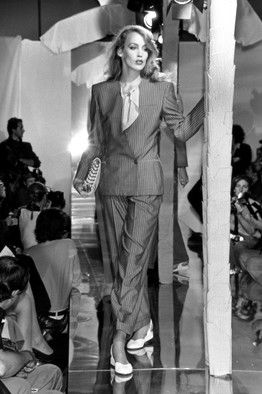
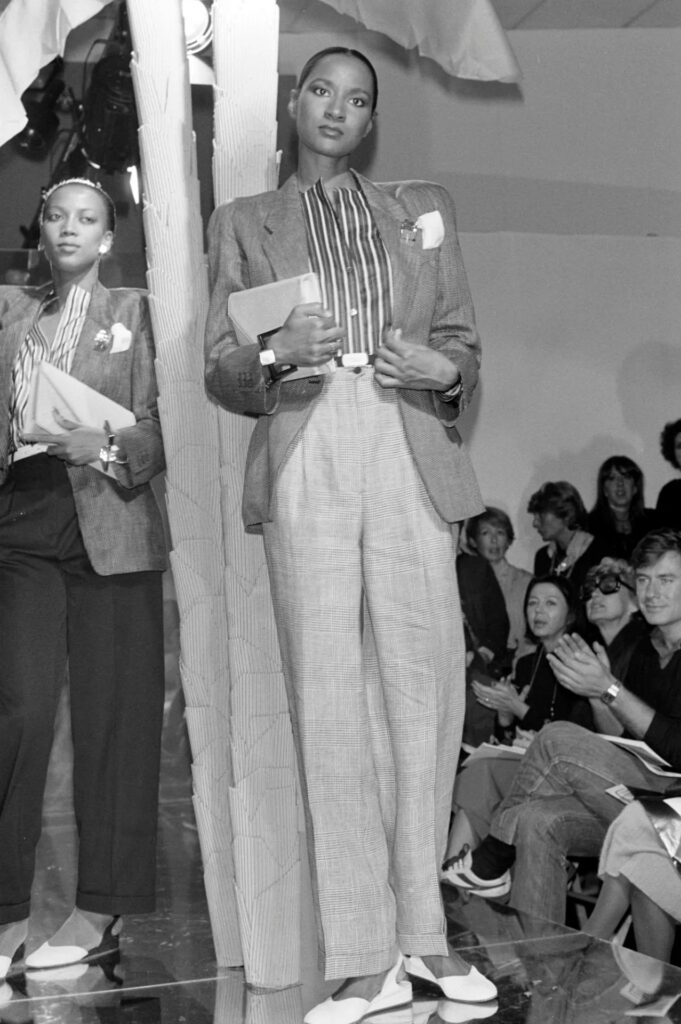
Look at those fabulous shoes – I just noticed this – great style and lines. And look at the photo on the right with the behind-the-scenes gal, who is not waif-thin, wearing her Armani pants and clothes. Too bad we can’t see more of her. But shows just how adaptable this style was. I have to wonder if Armani (who was all about detail) didn’t release this photo on purpose!
And it was the fabric that really made the design. It was light, whispery, and draped like a champion jersey, but it was woven. One of his favorite things to do was a classic weave, but in yellow and black. In the distance, it had a slight green cast to it. However, as you got closer, you could see that it was all either yellow or black. What I finally learned in art is that when you mix yellow with black, you get a dull olive because of the blue in the black paint. This was the type of detail that Armani loved.
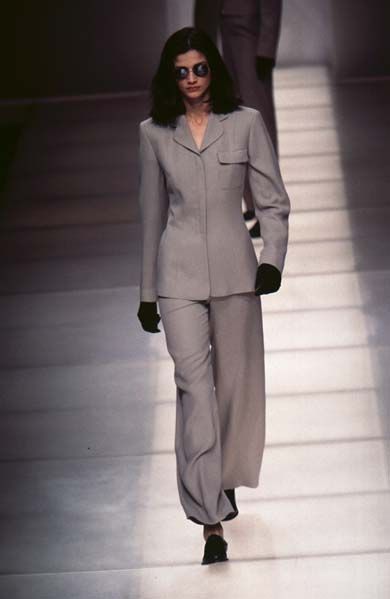
During the early 1990s, when everyone was wearing fashion junk, Armani held the line. He knew who his customer was, and he knew how she wanted to be dressed. The courage to do that when everyone else was showing trash for fashion made him stand out as a remarkable designer, true to his style and his customer. These pants (left) are typical of his style and swagger. Look at the movement in those trousers. That is not an accident.
Looking back at what made his designs so timeless and classic, he started with an excellent drape from the shoulder.
It all started with excellence right from the top. His shoulder pads never became outrageous, and therefore, he didn’t have to perform any technical maneuvers to achieve the correct drape. It was never sloppy, exagerated, or overdone like this:
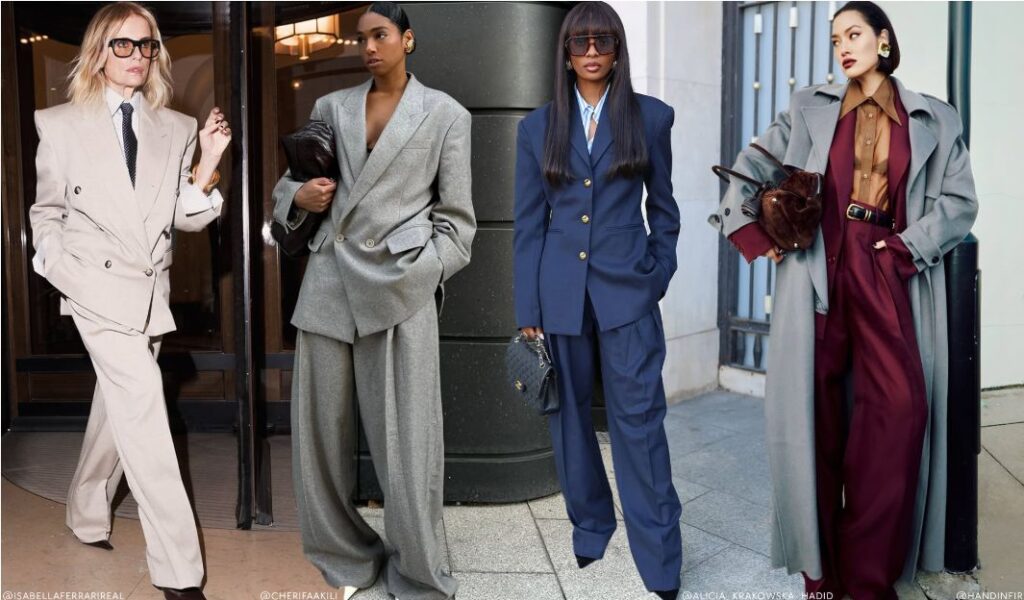
While everyone was doing an extended shoulder out into space, no matter what, Armani remained classic and down-to-earth.
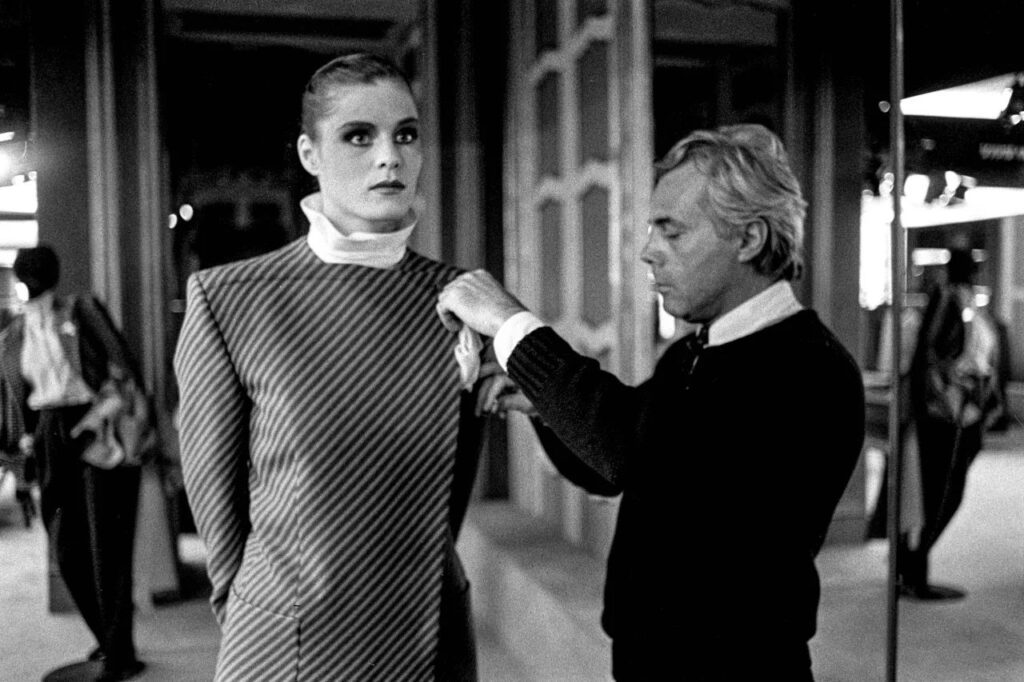
From the shoulder, he would tailor the jacket to shape the body.
From the jacket to the pants.
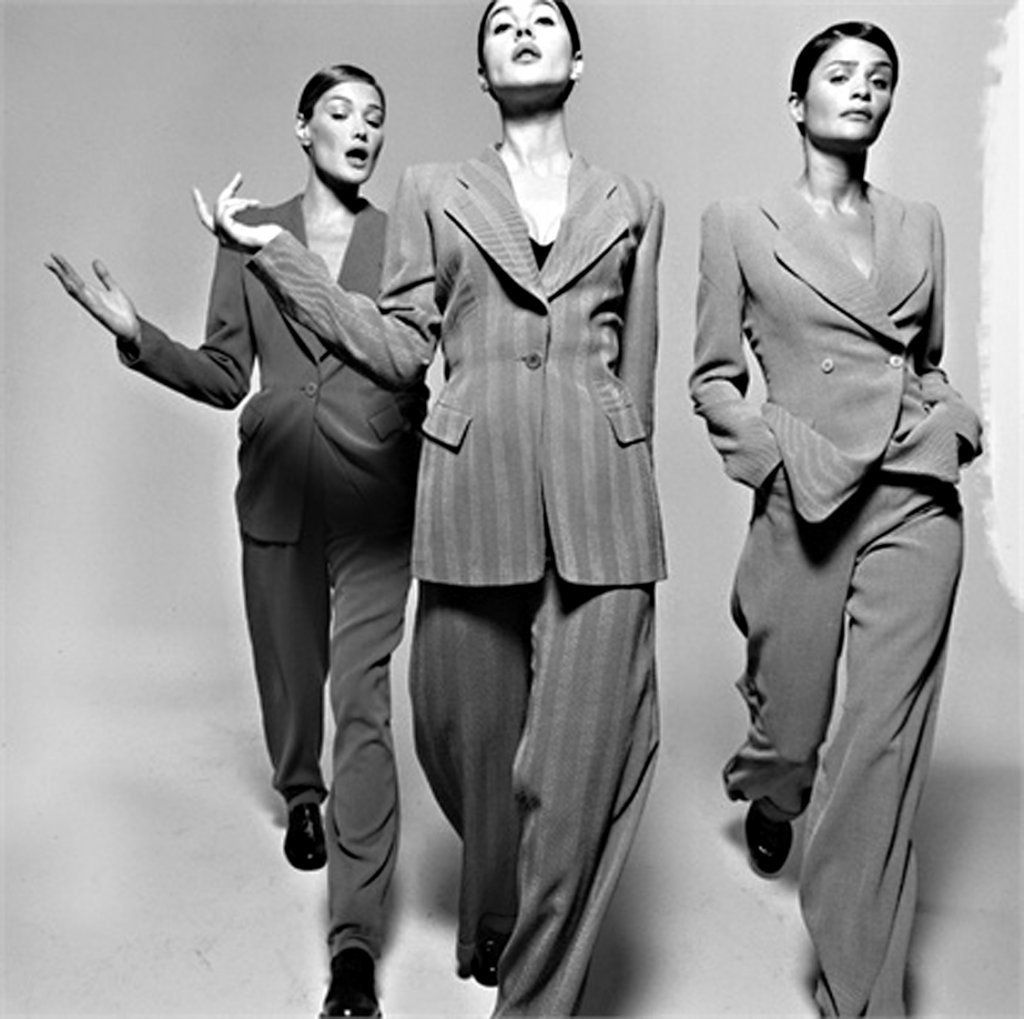
And the reveal of just how drapy and flowing those pants would become obvious.
This is where the fabric came in – draping and fluid. However, extra care had to be taken with the tailoring or the shoulder pad, as any thickness or insertions would be visible. That meant a whole new approach to tailoring in these jackets, as most of them were unlined, allowing them to drape and flow even more. The only thing that worked in these jackets was a lighter-weight interfacing. Even if Armani wanted to use a traditional light-weight interfacing, in the 1980s and 1990s, that interfacing would have been horsehair canvas, but that’s not a lightweight interfacing. Armani had to invent one that would keep the flow, but have enough body to hide the shaping elements inside the jacket. This is where the master tailor came in.
Those jackets felt like a loose shawl that draped around your body in the most flattering way. Even though the collar and lapel had this lightweight interfacing, the drape or skirt of the jacket had to be loose and free, even if it had interfacing. To accomplish this, Armani had to develop his own interfacing. Fortunately for us sewists at the time, the company put the item on the market, allowing us to purchase it. It was an extremely delicate and lightweight armoweft horsehair canvas.
But that wasn’t the end of it. The shoulder pads featured the same lightweight canvas with just a little padding, and they flopped around and draped beautifully with the newly styled canvas interfacing.
I found this fantastic video that describes Armani’s clothes in his own words. The video is of poor quality, but it does show how the clothes moved, and that was what was key about Armani’s clothes.
It’s the way they walked and moved that was so graceful and masterful. Even the jackets, and it shows Armani tearing a jacket apart to show how it might work without all the typical tailoring in the jacket. It was a whole new way of constructing clothes in a deconstructed way!
In the late 70s and early 80s, if you didn’t have an Armani, you wanted one. I was able to find a source for the fabric (which, even today, remains my biggest issue), and I made my own Armani-inspired outfits that I loved. But what really set Armani on fire was American Gigilo with Richard Gere. This scene was one of my favorites where he’s choosing clothes, and again, you can see the limber quality in the jackets.
This was the real magic of what Armani did. There were some other things too. When the whole world went crazy for Grunge, Armani didn’t. He remained loyal to his style and even castigated, especially Prada, for forsaking their heritage (they were an old, classic equestrian house, like Hermès), and they discarded it for junk fashion. That took a lot of guts to continue having stylish, beautiful clothes when all those were turning into junk clothes and junk fashion.
I’ll never forget the beautiful fabrics that all I had to ask for was Armani, and out would come these gorgeous pieces that were as exciting for their touch and weight as they were for their color. Like iridescent silks, his fabrics had such a trick-of-the-eye color to them. You thought you were seeing one color, but when you looked closer, it was something else entirely. That sort of fun with fabric was just as enjoyable as the whole make and structure of the garment.
He was definitely one of a kind, like Valentino, Oscar de la Renta, and Karl Lagerfeld – all of these designers were classically trained and brought a wealth of knowledge and expertise to their craft. I miss that today in clothing.
Giorgio Armani 1934 – 2025

Armani was a fashion genius!
He was and along with Oscar, Valentino, Karl they are a dying breed.